Clemson SC
Fishing
News
— Page 2
Live conditions, species status, solunar ratings, water body profiles, SCDNR regulations, and community fishing coverage for Pickens lakes and rivers.
HERE Clemson is your local source for fishing reports, conditions, and SCDNR regulations across Pickens. Use the waters list to find lakes, rivers, and reservoirs near you, the regulations section for current limits, and the guides directory to book a trip.
- Calm winds make for ideal casting conditions. Fish will be spooky in clear water — use light line and natural presentations.
- Falling barometric pressure activates feeding. Fish are on the move — work moving baits and cover water quickly.
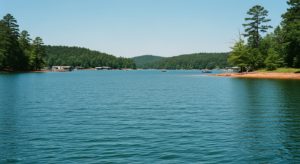
Lake Hartwell is a 56,000-acre impoundment straddling the South Carolina–Georgia border, with the dam sited at Clemson. Created by the U.S. Army Corps of Engineers between 1955 and 1963, it ranks among the Top 5 most-visited Corps lakes in the United States. The lake holds three black bass species — largemouth, smallmouth, and spotted — along with a well-established striped and hybrid bass fishery and strong crappie action around 23 SCDNR-maintained fish attractors and Christmas-tree reef structures. The Pickens County shoreline covers the northwestern arm of the lake and includes Twin Lakes Recreation Area with a fishing pier.
Multiple public boat ramps and access areas on the SC side of Lake Hartwell, including Twin Lakes Recreation Area (Pickens County, fishing pier), Singing Pines Recreation Area, Broyles Recreation Area, Sadlers Creek State Park (two ramps, 100-ft fishing pier), and Lake Hartwell State Park (two ramps, 140-ft fishing pier). Clemson Marina (150 Clemson Marina Dr., Seneca) provides additional launch access. SC freshwater fishing license required for anglers 16+.
Lake Keowee is an 18,500-acre Duke Energy reservoir formed by impounding the Keowee River in 1971 to support the Oconee Nuclear Station. Its steep-sided, clear, mountain-fed water supports all four black bass species native to South Carolina. Spotted bass predominate and have established Keowee as one of the premier spotted-bass lakes in the Upstate; Keowee's 'hot hole' — the warm-water discharge near the nuclear plant — concentrates spotted bass and baitfish throughout winter. Seventeen fish attractors maintain crappie populations in the lake's deep coves.
Public access is available at Duke Energy Access Areas distributed around the lake, Keowee-Toxaway State Park (no-wake bank fishing; boat ramp access to Keowee five miles away), South Cove County Park, Mile Creek County Park, and High Falls County Park. SC freshwater fishing license required; no reciprocal GA agreement — SC license required.
Lake Jocassee is the crown jewel of South Carolina mountain fishing — the only lake in the state offering both trophy-class trout and smallmouth bass. Fed by four cold mountain streams and reaching depths of 300+ feet, the lake's crystal-clear water maintains temperatures that allow SCDNR to maintain a year-round trophy trout fishery. Average rainbow trout from Jocassee weigh nearly 3 pounds; average brown trout run 4–5 pounds. State records for brown trout (17 lbs 9.5 oz), rainbow trout (11 lbs 5 oz), redeye bass, smallmouth bass, and spotted bass have all been set here. Access is exclusively through Devils Fork State Park; boat ramps, bank fishing, and four launch areas are provided by the state park.
Devils Fork State Park provides the only road access to Lake Jocassee. Four boat ramps for motorized and non-motorized craft. Bank fishing available along the park shoreline. Park entry fee applies. SC freshwater fishing license required; lake is SC-only, no Georgia reciprocal agreement. All trout transported across Lake Jocassee must comply with Jocassee trout length and creel limits.
The Chattooga National Wild and Scenic River is South Carolina's finest trout stream and one of the most celebrated free-flowing mountain rivers in the Southeast. Designated under the Wild and Scenic Rivers Act in 1974 and running 40 miles along the SC–GA border through Sumter National Forest, the Chattooga supports distinct fishing zones from headwaters to lowlands. Wild brown trout dominate the upper section (NC line to Big Bend Falls) within the Ellicott Rock Wilderness; helicopter-stocked rainbows and browns populate the backcountry reach from Burrell's Ford to Reed Creek; the 3-mile Delayed Harvest section from Reed Creek to SC Hwy 28 is heavily stocked November through May and restricted to single-hook artificial lures catch-and-release during that period. Below SC 28, the river offers a mix of stocked trout and native Bartram's redeye bass.
Major access points on the SC side include Burrell's Ford Bridge and Campground (off SC 107), SC Hwy 28 Bridge (Delayed Harvest section put-in), Long Bottom Ford Road access, and US Hwy 76 at the lower river. No road access within 0.25 mile of most of the river corridor due to Wild and Scenic designation — hiking required. A valid SC OR GA freshwater license is accepted on border waters (reciprocal agreement). USFS self-registration permit required for floating; free and available at each put-in.
The Seneca River forms where the Keowee and Tugaloo rivers meet and flows southeast through Oconee and Pickens counties before entering the upper arm of Lake Hartwell near Clemson. The river corridor offers classic Upstate river fishing for multiple bass species in a relatively undeveloped setting. Redeye (Coosa) bass — a Blue Ridge specialty species — inhabit the shoal reaches alongside largemouth, smallmouth, and spotted bass. Redbreast sunfish are abundant on the rocky bottom stretches and respond readily to small spinners and live worms.
Scattered public access exists along SC Hwy 188, SC Hwy 37, and at points where county roads bridge the river. Kayak and canoe access near Seneca city limits provides additional entry. SC freshwater fishing license required. Note: The Seneca River and all Savannah River system tributaries (upstream of main impoundments) are not covered by the SC–GA reciprocal license agreement; SC license required.
Twelve Mile River drains the northern Pickens County foothills and flows southward through the Clemson Experimental Forest before entering Lake Hartwell near Central. The upper reaches of the creek in the Clemson Experimental Forest — where the watershed borders the Issaqueena area — hold stocked trout and native redbreast sunfish in cool, clear water. Nongame fishing devices are prohibited in Game Zone 1, keeping this stream effectively a hook-and-line fishery consistent with SCDNR's approach to protecting native trout habitat in the Upstate. The Upstate Forever Twelve Mile River Blueway map (434 Lay Bridge Road and Maw Bridge Road access points) documents put-in and take-out points for paddle anglers working the creek's mid-section.
Public land access available where Twelve Mile River passes through the Clemson Experimental Forest (CEF) and at county road bridges. Lay Bridge Road (434 Lay Bridge Rd, Central, SC 29630) and Maw Bridge Road (1002 Maw Bridge Rd, Central, SC 29630) provide kayak and canoe access per the Upstate Forever Twelvemile River Blueway. CEF property is open to fishing under SC DNR regulations; no CEF-specific permit required for fishing. SC freshwater fishing license required for anglers 16+.
Eastatoe Creek in northern Pickens County is one of SCDNR's key designated trout streams in the Upstate and flows through the Eastatoe Creek Heritage Preserve — a section of the Jim Timmerman Natural Resources Area at Jocassee Gorges. The preserve features a steep mountain gorge with old-growth hemlock, rock cliffs, rare ferns, and a stream supporting naturally reproducing rainbow trout. The Eastatoe is listed separately in SCDNR trout regulations with its own creel limit (7 trout per day on Heritage Preserve lands) reflecting the sensitive wild fishery. Trout from the Walhalla State Fish Hatchery supplement wild populations in accessible reaches. The creek is one of fourteen Upstate streams receiving regular SCDNR stocking March through June and again in October–November.
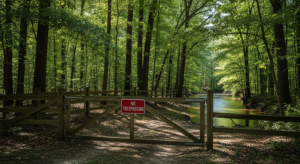
Access via US-178 north from Pickens, then Horsepasture Road to the Eastatoe Creek Heritage Preserve trailhead (red gate). Foot access only within the preserve — no motorized vehicles. Fishing is permitted under WMA regulations. SC freshwater fishing license required; artificial lures only within Heritage Preserve boundaries (posted on-site). Note: Eastatoe Creek Heritage Preserve is part of the Jim Timmerman Natural Resources Area — check SCDNR for seasonal closures during hunting season.
Know a Clemson-area fishing lake, pond, or river stretch that should be on this list? Let us know.
Report a Fishing SpotGet listed in the Field Guides section and reach active anglers across Pickens and the HERE City Network.
List Your Guide ServiceIn Season Now: Clemson Fishing · Nov. 11
- Largemouth Bass March-June (spawn), September-November
From this page's species calendar. Check current SCDNR size and creel limits before you fish.
Fishing News HERE


Hand-picked by the HERE Fishing desk this week. Fishing Rod Holder Smart Fish Catcher Fishing Pole Holders Automatic Spring Tip-Up Hook with….

Hand-picked by the HERE Fishing desk this week. HADORAM Robotic Swimming Lure 5.1” Fishing Lure 4-Segement Multi Jointed Swimbait Electric B….

Hand-picked by the HERE Fishing desk this week. Garmin Striker Cast, Castable Sonar, Pair with Mobile Device and Cast from Anywhere, Reel in….

Hand-picked by the HERE Fishing desk this week. Deeper PRO+ 2 Sonar Fish Finder - Portable Fish Finder and Depth Finder For Kayaks, Boats an….

Hand-picked by the HERE Fishing desk this week. Chasing Gladius MINI S Upgraded Professional Underwater Drone Set, with 4k Resolution + EIS ….

Hand-picked by the HERE Fishing desk this week. 【2025 New】FIFISH V-EVO 4K60FPS Underwater Drone with Robotic Arm, with Removable SD Card, QY….
Get featured in the Essential Gear section and reach active anglers across the HERE City Network — 100+ cities.
Learn About Gear Advertising- Free fishing days for South Carolina residents in fresh water: Memorial Day (May 31, 2027) and July 4, 2027 (S.C. Code § 50-9-730).
- A total of 40 game fish may be kept per person per day across all freshwater species limits.
- State parks, city reservoirs and county lakes can set their own limits — check posted rules.
-
Yes. All anglers 16 and older need a South Carolina freshwater fishing license. Licenses are available through SCDNR at dnr.sc.gov or at authorized license agents throughout Pickens and Oconee counties. Annual resident freshwater licenses are available at low cost; anglers under 16 fish free with a licensed adult. Lake Hartwell is a reciprocal water — a valid SC or GA freshwater fishing license is accepted on Lake Hartwell and its covered border waters. Lake Keowee and Lake Jocassee are SC-only — a South Carolina license is required on both. The Chattooga River (border waters) also accepts either SC or GA license. Verify current SCDNR and Georgia DNR rules before fishing any border water.
-
Clemson and Pickens County are flanked by three of South Carolina's most productive and visually spectacular lakes. Lake Hartwell, impounded by the U.S. Army Corps of Engineers between 1955 and 1963, covers 56,000 acres with 962 miles of shoreline along the SC–Georgia border; the dam sits in Clemson itself. Hartwell holds three black bass species — largemouth, smallmouth, and spotted — alongside a strong striped and hybrid bass fishery, dense crappie populations around 23 SCDNR fish-attractor reef structures, bluegill, redear sunfish, and blue and channel catfish. Multiple state park and Corps ramps on the SC side provide easy public access. Lake Keowee, created in 1971 by Duke Energy to support the Oconee Nuclear Station, spans 18,500 acres with crystal-clear, steep-sided mountain water. Spotted bass dominate Keowee's fishery, with Duke Energy's warm-water discharge from the nuclear plant creating a winter hot-hole that concentrates bass and baitfish. Duke Energy access areas and three Oconee County parks (South Cove, Mile Creek, High Falls) serve as public launch points. Lake Jocassee, the smallest and deepest of the three at 7,565 acres and depths exceeding 300 feet, is fed by four cold mountain streams and maintained as a year-round trophy trout fishery. SCDNR has managed Jocassee for trout since 1972; the lake holds current state records for five species and averages 3-pound rainbows and 4-to-5-pound browns. Access is exclusively through Devils Fork State Park in Salem.
-
Crappie fishing in the Clemson area centers on Lake Hartwell, which maintains 23 SCDNR-managed fish attractor reefs throughout the lake basin. These Christmas-tree and artificial-structure reefs are mapped and accessible to anglers with GPS-capable fish finders and provide reliable crappie holding areas in 12–25 feet of water year-round. The spawn runs from mid-March through late April when water temperatures reach the 58–65°F range — during this period, crappie move into 3–8 feet of depth along dock pilings, flooded timber, and brush pile edges. Drop a 1/32-oz tube jig or small crappie minnow just above the structure for consistent bites. Lake Keowee also holds white and black crappie, particularly in cove backs and around dock structure, though populations are less dense than Hartwell. Standard SC creel limits (no minimum size, 30-per-day statewide) apply on both lakes; verify current regulations before fishing at dnr.sc.gov.
-
The Clemson and Pickens County region is outstanding kayak-fishing territory across multiple water types. Lake Jocassee is particularly popular for kayak anglers targeting trout — the lake's steep, clear shoreline requires little paddling to reach productive depths, and Devils Fork State Park's four ramps accommodate kayak launches easily. Lake Keowee's Duke Energy access areas and county parks (South Cove, Mile Creek) are ideal kayak launch points for working cove edges and dock structures for spotted bass. On moving water, the Chattooga River below Highway 28 allows float-fishing for stocked trout in a spectacular gorge setting (self-registration permit required for all floaters; SC or GA license accepted). The Twelve Mile River Blueway (access at Lay Bridge Road and Maw Bridge Road in Central) is a designated paddle route through northern Pickens County with bank-fishing opportunities for trout, bass, and sunfish. The Seneca River corridor near its confluence with Lake Hartwell also provides quiet kayak fishing for smallmouth, redeye bass, and redbreast sunfish along rocky mid-river structure.
-
Pickens and adjacent Oconee counties host South Carolina's most extensive trout stream system, with approximately fourteen mountain streams receiving regular SCDNR stocking from the Walhalla State Fish Hatchery. In Pickens County, Eastatoe Creek is the signature wild-trout stream — the Heritage Preserve reach in northern Pickens holds naturally reproducing rainbow trout in old-growth hemlock gorge habitat and is classified as artificial lures only. Twelve Mile River drains the northern Pickens County foothills through the Clemson Experimental Forest and receives stocked trout in accessible reaches each spring and fall. In adjacent Oconee County, the Chattooga River is the state's most celebrated trout fishery: wild brown trout above Big Bend Falls, helicopter-stocked fish in the backcountry reach, and a 3-mile Delayed Harvest zone at Highway 28 that is catch-and-release with single-hook artificial lures from November 1 through May 14. The East Fork of the Chattooga off SC 107 provides additional access to stocked and wild brown trout near the Walhalla State Fish Hatchery. Table Rock State Park in Pickens County stocks trout seasonally in Pinnacle Lake and Lake Oolenoy. A SC freshwater fishing license is required on all streams; either SC or GA license is valid on Chattooga border waters.
-
The Clemson and Pickens County area is unquestionably South Carolina's trout capital, sitting at the edge of the Blue Ridge Escarpment where cold mountain streams and deep cold-water reservoirs sustain remarkable fisheries. Lake Jocassee is SCDNR's premier trophy-trout lake — stocked annually with hatchery rainbows and browns since 1972, and currently supporting average catches of 3-pound rainbows and 4-to-5-pound browns. The lake's 300-foot depths stay cold year-round, allowing trout to grow to exceptional size. State records for brown trout (17 lbs 9.5 oz) and rainbow trout (11 lbs 5 oz) came from Jocassee. Trolling spoons and plugs on downriggers in 40–100 feet is the standard technique. In streams, the Chattooga River offers the state's widest variety of trout environments: wild browns in Ellicott Rock Wilderness, stocked mixed-species fishing near Burrell's Ford, and a managed Delayed Harvest zone at Highway 28. Eastatoe Creek in northern Pickens County is classified as a Heritage Preserve stream with wild rainbow trout and a 7-fish-per-day limit. Twelve Mile River provides accessible stocked-trout fishing through the Clemson Experimental Forest. SCDNR stocks approximately 500,000 fingerlings and catchable-size brook, brown, and rainbow trout annually across approximately fourteen Upstate mountain streams, with stocking occurring March through June and again in October and November.
FISHING NEWS NEAR CLEMSON SC
Latest Clemson Fishing News — Page 2
Clemson-Area Anglers Urged to Review Summer Fishing Safety Guide
The importance of safe practices for recreational activities on local waterways has been underscored by the release of a comprehensive summer fishing safety guide. The guide, which outlines…
Comprehensive Guide Outlines Summer Fishing Safety for Clemson Anglers
As summer continues to unfold across the Upstate, a new comprehensive guide has been released, offering crucial safety recommendations for individuals planning to fish in and around Clemson.…
OnDemand Legal Course Offers Insights on Land Access for Hunting and Fishing, Relevant to Clemson Area
An OnDemand video course focused on the legal intricacies of land access for hunting and fishing has been released, providing a detailed examination of various agreement types and…
A Beginner’s Guide to Freshwater Fishing in the Clemson Area
Freshwater fishing continues to attract a growing number of participants across the United States, with an estimated 40 million anglers engaging in the activity. For residents and newcomers…
Clemson Anglers Urged to Review Summer Fishing Safety Guidelines
CLEMSON — Anglers heading out onto the region’s lakes and rivers this summer are being reminded to prioritize safety, with a new guide detailing essential precautions for sun…
SC Fishing Regulations Every Angler Should Know: Bag Limits, Size Limits, Seasons
A plain-language summary of South Carolina's key bag limits, size limits, and seasons for Clemson anglers fishing Lake Hartwell — from bass and crappie to redfish and flounder…
How to Fish Lake Hartwell: A Complete Guide to South Carolina’s Premier Fisheries
A Clemson angler's guide to Lake Hartwell, with the five SC lake and river tactics — from herring-fed stripers to full-moon shellcracker beds — that work across every…
South Carolina Freshwater Fishing License Guide 2026-2027: Fees, Permits, Where to Buy
Everything Clemson anglers need to know about SC fishing license fees, the combination hunting-fishing option, senior and disabled veteran discounts, and the fastest ways to get licensed before…