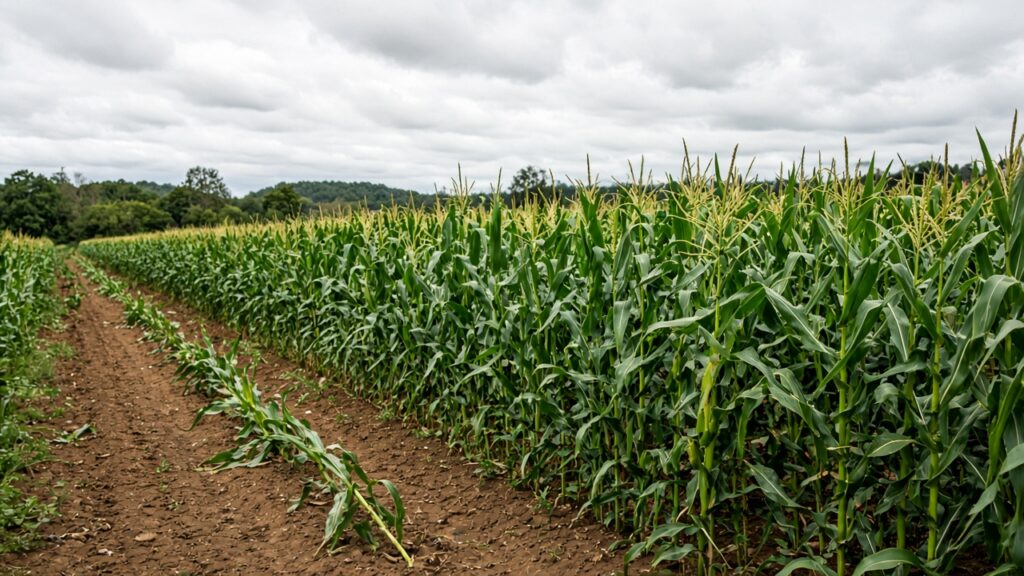
Campus scientists in Clemson are attached to a national study of corn that collapses before it can be cut. A local report dated Saturday and the university's own announcement describe one award, not two different checks. The National Science Foundation is funding a four-year project at $6 million. The University of Idaho is the lead campus. The University of Nebraska Medical Center is the other partner. Clemson's piece of that award is $2 million.
Rajandeep Sekhon, an associate professor in genetics and biochemistry, directs the Clemson side. The $2 million is for tracing why a stalk stays up or fails, from genetic differences through the plant's chemistry and structure. The failure mode is called stalk lodging: mature plants bend or snap and then miss the harvest. Both pages point to a peer-reviewed paper by Clemson researchers and collaborators that estimates global maize losses from lodging at more than $6 billion a year.
Statistician Chris McMahan is lined up to combine the measurements in statistical models. Nishanth Tharayil and Trevor Rife, faculty in the agriculture college, are contributing cell-wall chemistry and high-volume field measurements. The plan is to grow about 1,000 inbred lines in South Carolina and record strength, stiffness, diameter, rind thickness, and the layout of cells. The target is about 500 gene forms that breeders could select. Idaho engineers are designing sensors that could sit on harvest equipment.
A photo caption beside the material calls the funding a health-agency grant. The sentences of the local report and of the campus announcement both name the science foundation, and those sentences are the ones used here.