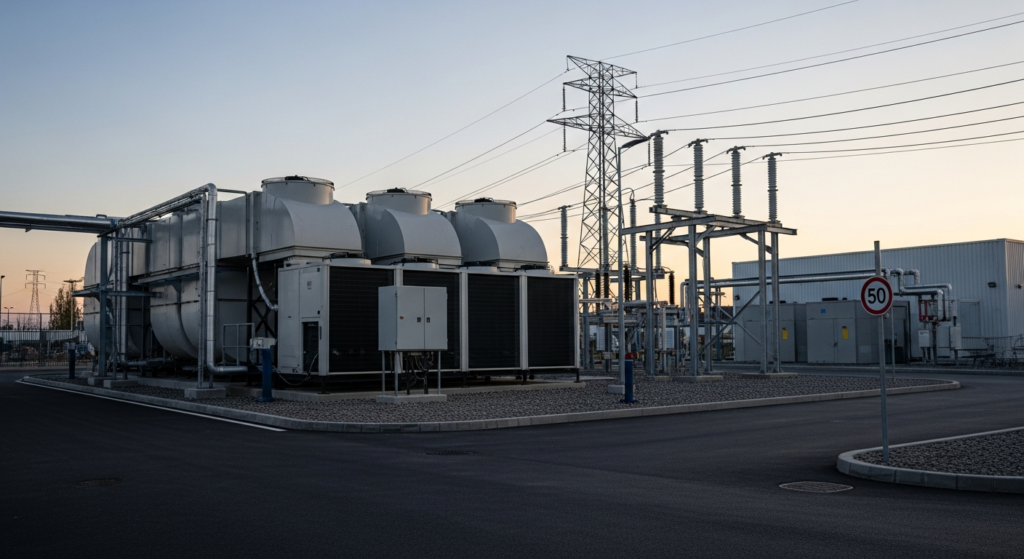
The burgeoning demand for artificial intelligence capabilities across industries is reshaping the landscape of technology infrastructure, with a critical shift in focus from advanced microchips to the underlying electrical power grid. This evolving dynamic presents a new set of challenges for utility providers and urban planners, including those in Clemson, as the energy requirements for AI data centers continue to escalate.
For years, the conversation around AI development centered on the creation of more powerful and efficient processors. However, as AI models grow in complexity and scale, the sheer volume of computation required for training and continuous inference has pushed power consumption to unprecedented levels. Modern AI data centers, which house thousands of specialized graphics processing units (GPUs) and other high-performance computing hardware, draw immense amounts of electricity not only for computation but also for the extensive cooling systems necessary to prevent overheating. This makes power, rather than chip availability, the new critical constraint in AI expansion.
This surge in demand is placing considerable strain on existing electrical grids. Traditional grid infrastructure, often designed for more predictable load patterns, is struggling to accommodate the continuous, high-intensity power draw of large-scale AI operations. This has led to concerns about grid reliability, with experts highlighting the potential for brownouts or even blackouts if infrastructure upgrades do not keep pace with the exponential growth in AI power needs. Utility companies are now engaged in long-term planning efforts, often spanning decades, to modernize and expand their transmission and distribution networks, a capital-intensive undertaking.
The implications extend beyond just the technical aspects of power delivery. The need for vast amounts of reliable, clean energy for AI data centers is influencing site selection for new facilities, often favoring locations with robust power grids and access to renewable energy sources. This national trend means that communities across the country, including those with significant institutional and industrial presences, must consider how these energy demands will affect their local infrastructure and economic development.
In Clemson, a city anchored by Clemson University, these national trends have particular resonance. Clemson University itself, as a major research institution, operates extensive computing facilities that support a wide array of academic and scientific endeavors, some of which undoubtedly involve advanced computational models and artificial intelligence. The university’s energy footprint is substantial, and any significant expansion of its research computing capabilities, particularly in AI, would directly contribute to the local power demand. This places the university among the key local entities that regional power companies serving the Clemson area would consider in their long-term infrastructure planning.
The City of Clemson government, led by Mayor Robert Halfacre and City Administrator David ‘Andy’ Blondeau, is responsible for overseeing municipal infrastructure and planning for future growth. While no specific AI data center projects have been announced within city limits, the broader trend of increasing energy demand for technology infrastructure will inevitably factor into discussions about zoning, utility partnerships, and overall urban development strategies. Similarly, Pickens County officials, including County Council Chair Alex Saitta and County Administrator Kenneth Roper, would be involved in county-wide infrastructure considerations that could impact industrial energy users like BASF Corporation’s operations in Pickens County.
Local utility providers serving the Clemson area face the challenge of forecasting future energy needs accurately and investing in the necessary upgrades to ensure grid stability. This involves not only increasing generation capacity but also modernizing transmission lines and substations to handle higher loads and ensure resilience. The scale of investment required for these upgrades is significant, and the planning cycles are lengthy, often requiring coordination with state regulators and local governments.
Why it matters in Clemson
The national pivot towards power as the primary constraint for AI infrastructure directly impacts Clemson’s future development and resource planning. As Clemson University continues its role as a leading research institution, its computational demands, potentially including advanced AI applications, will contribute to the local energy load. The City of Clemson and Pickens County officials face the ongoing task of ensuring that the local infrastructure, including the electrical grid, can support both existing residents and businesses, as well as future technological growth. Reliable and sufficient power is fundamental to the economic vitality and quality of life in Clemson, making the national conversation around AI’s energy footprint a critical local concern for long-term strategic planning and resource allocation.
Section: More Clemson SC business news
Clemson business profiles
Filed under: Clemson SC Business News