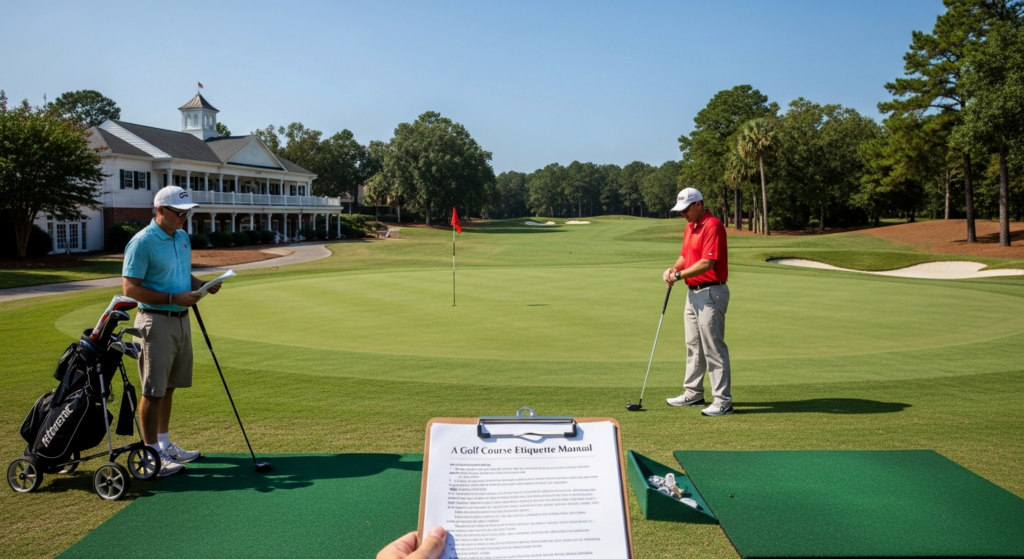
A foundational document titled “A Golf Course Etiquette Manual,” last revised in March 2013, continues to serve as a crucial reference for golfers aiming to enhance their experience on the links while preserving the integrity of the game and its facilities. The manual introduces a spectrum of basic golf etiquette principles designed to improve player enjoyment, ensure safety, and maintain optimal course conditions.
Central to the manual’s guidance are explicit recommendations concerning player conduct, ranging from appropriate dress codes and cell phone usage to clubhouse decorum and the proper use of practice facilities. These guidelines underscore the sport’s long-standing traditions of respect and consideration, fostering an environment where all participants can enjoy the game without undue distraction or disruption.
Pace of Play: A Cornerstone of Courtesy
One of the most frequently discussed aspects of golf etiquette, and a significant focus of the manual, is the pace of play. The guide advises players to arrive at the course with ample preparation time, recommending a window of five to 15 minutes before their scheduled tee time to complete any necessary advance work. This ensures that groups are ready to begin promptly, preventing delays that can ripple across the entire course.
The manual asserts that most 18-hole courses can be completed in four hours or less by a group of four, provided that groups maintain an appropriate pace. This target is not merely an arbitrary suggestion but a critical component of course management and player satisfaction. When groups fall behind, it creates bottlenecks, leading to frustration for those waiting and potentially rushing players ahead, diminishing the overall experience for everyone.
To facilitate an efficient pace, specific recommendations are offered for common scenarios that can cause delays. For instance, players are advised to abandon the search for a lost ball after a maximum of five minutes. While the desire to recover a ball is understandable, prolonged searches significantly impede play. Similarly, the manual advocates for hitting a provisional ball when there is a reasonable possibility that a shot may be out of bounds or lost outside a water hazard. This proactive measure saves valuable time by eliminating the need to return to the original spot if the first ball is indeed unplayable or lost.
Adherence to these pace-of-play guidelines is not just about speed; it is about respecting the time and enjoyment of fellow golfers. A well-paced round contributes to a more relaxed and enjoyable atmosphere for all participants, allowing the course to operate smoothly and accommodate more players throughout the day.
Ensuring Safety on the Course
Golf, despite its seemingly tranquil nature, involves powerful swings and fast-moving projectiles, necessitating strict adherence to safety protocols. The manual dedicates significant attention to ensuring player safety, outlining several non-negotiable rules.
Foremost among these is the requirement that players ensure no one is within reach of a club during a swing, whether it be a practice swing or an actual stroke. This simple rule prevents accidental injuries from errant clubs. Equally important is the directive to wait until players ahead are well out of range before hitting a ball. Misjudging distance or striking an unexpected shot can send a ball hurtling towards unsuspecting individuals, with potentially severe consequences. The manual emphasizes that it is the responsibility of the hitting player to confirm the safety of those ahead.
In instances where a ball in motion might strike someone, the manual instructs players to immediately and loudly shout “FORE!” This universally recognized warning provides crucial seconds for others to take cover, potentially preventing serious injury. These safety guidelines are not merely suggestions but fundamental principles designed to protect everyone on the course, from fellow players to course staff and spectators.
Preserving Course Conditions Through Diligent Care
The long-term health and playability of a golf course depend heavily on the care and respect shown by its users. The “A Golf Course Etiquette Manual” provides detailed guidance on course maintenance, encouraging players to actively participate in preserving the pristine conditions of the greens, fairways, and bunkers.
One primary responsibility is the replacement of divots. When a player takes a divot – a piece of turf removed during a swing – it is imperative to replace it properly or fill the cavity with sand, if provided. This simple act aids in the quick recovery of the turf, maintaining the quality of the playing surface for subsequent groups. Similarly, players are instructed to rake bunkers after use. Footprints and club marks left in sand traps create uneven lies and can be frustrating for the next player, detracting from the fairness and challenge of the hazard.
Repairing ball marks on putting greens is another critical aspect of course care. The impact of a golf ball can leave a small depression, which, if left unrepaired, can damage the delicate turf and affect the roll of future putts. The manual outlines the correct technique for repairing these marks, ensuring the green recovers quickly and smoothly. Furthermore, players are advised to avoid any actions that could damage greens and holes, such as dragging feet, dropping clubs, or standing too close to the cup.
Golf cart policies are also addressed, with guidance on keeping carts away from tees and greens, areas particularly susceptible to damage from heavy traffic. The manual highlights the importance of following prescribed cart policies, including the use of the 90-degree rule where applicable. This rule directs players to drive the cart along the cart path until it is parallel with their ball, then turn at a 90-degree angle and drive directly to the ball, minimizing wear and tear on the fairways.
By adhering to these course-maintenance guidelines, golfers contribute directly to the longevity and aesthetic appeal of the facility. This collective responsibility ensures that the course remains in excellent condition, providing an optimal playing experience for all who visit.
Why it matters in Clemson
For the Clemson community, a clear understanding and consistent application of golf etiquette are paramount to maintaining the high standards of recreational opportunities available. While specific golf courses are not detailed in the city context, the presence of a vibrant community around Clemson University and the broader Upstate region means that many residents and visitors engage in golf. Adherence to a manual like this ensures that local facilities, whether public or private, remain enjoyable and well-preserved. It fosters a culture of respect among players, contributing to a positive image for the City of Clemson and enhancing the overall quality of life for those who value the sport. The principles of courtesy, safety, and course care outlined in the manual directly impact the experience for students, faculty, and long-term residents who frequent golf courses in the area, reinforcing community values of sportsmanship and stewardship. The continued relevance of such guidelines helps ensure that golf remains an accessible and pleasant pastime for all in Clemson.