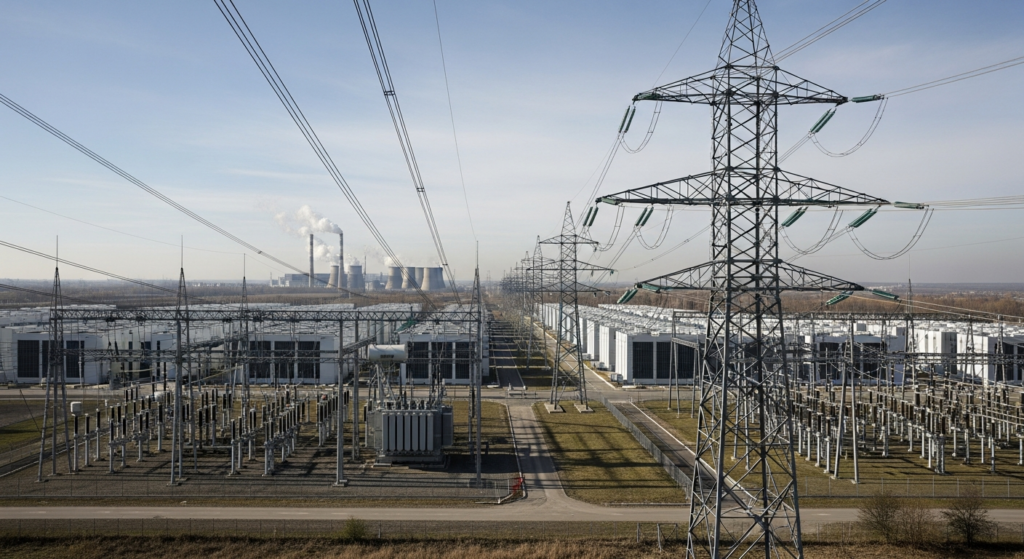
The rapid expansion of artificial intelligence technologies is fueling an unprecedented demand for data centers, placing increasing pressure on existing electrical grids and prompting a reevaluation of local planning and economic development priorities across the nation, including in Clemson.
These advanced computing facilities, essential for processing the vast amounts of data required by AI applications, are significant consumers of electricity. Industry analyses consistently highlight how the availability of robust grid capacity has become a primary determinant in the site selection process for new data center developments. This trend is reshaping discussions around infrastructure investment, zoning regulations, and the long-term energy outlook for municipalities.
In Clemson, a city anchored by Clemson University, the implications of this national trend are beginning to factor into broader conversations about future growth. While no specific AI data center projects have been announced for the immediate area, the underlying dynamics of power demand and site readiness are relevant to the City of Clemson’s ongoing infrastructure planning. The city, which manages its own municipal services, must consider how regional energy demands could influence local utility operations and the broader Upstate power network.
Economic development officials in Pickens County and the surrounding region are navigating a new landscape where access to reliable and substantial power is as critical as traditional factors like transportation access or a skilled workforce. The potential for data center development presents both an opportunity for economic diversification and a challenge in ensuring that the necessary power infrastructure can be supported without undue strain on existing resources or significant ratepayer impact. Discussions around land use, particularly along key corridors such as US-123 / Tiger Boulevard, US-76, and SC-93, could evolve to accommodate the specific needs of these energy-intensive facilities, which often require large, flat parcels of land.
Moreover, the workforce implications of the AI data center boom are multifaceted. While data centers themselves are not typically large direct employers once operational, their construction phases can generate temporary jobs, and their presence can attract ancillary tech businesses. Institutions like Clemson University and Tri-County Technical College, with their established programs in engineering, computer science, and technical trades, could play a role in preparing a local workforce equipped to support such an industry, from construction and maintenance to specialized IT roles. The presence of a major research university like Clemson University also offers potential for collaboration in areas of energy efficiency and advanced computing research.
Zoning considerations are another critical aspect. The City of Clemson’s planning department would need to assess how existing zoning ordinances might apply to data center developments, which often have unique requirements regarding noise, cooling systems, and security. Integrating such facilities into the local fabric, particularly near residential areas like Patrick Square or Calhoun Forest, would necessitate careful review and community input to balance economic benefits with quality of life concerns.
Water resources, specifically the Seneca River, Keowee River, and lakes like Lake Hartwell and Lake Keowee, are also relevant. Data centers often require significant amounts of water for cooling systems, a factor that must be weighed in any long-term development strategy. Responsible management of these natural assets is a continuous priority for the region, especially during the summer months when water usage can peak.
The broader conversation around grid capacity extends beyond municipal boundaries, involving regional power providers and state-level energy policy. The demand from AI data centers is prompting utilities to accelerate investments in transmission and distribution infrastructure, as well as explore new generation sources. These investments, while necessary to support technological growth, can have long-term financial implications for ratepayers across the service area.
### Why it matters in Clemson
The escalating demand for AI data centers and their substantial energy requirements directly impacts long-term planning for the City of Clemson. As a hub for higher education and a growing community, Clemson must consider how regional energy infrastructure, land use, and workforce development strategies will adapt to this evolving technological landscape. The City of Clemson, in conjunction with Pickens County, faces the challenge of balancing economic development opportunities with the need to maintain grid stability and manage resources responsibly. The presence of Clemson University and Tri-County Technical College positions the area to potentially contribute to the skilled workforce needed for such facilities, while also requiring careful consideration of how increased power demand might affect local utility costs and environmental stewardship, particularly regarding water resources like Lake Hartwell and Lake Keowee.