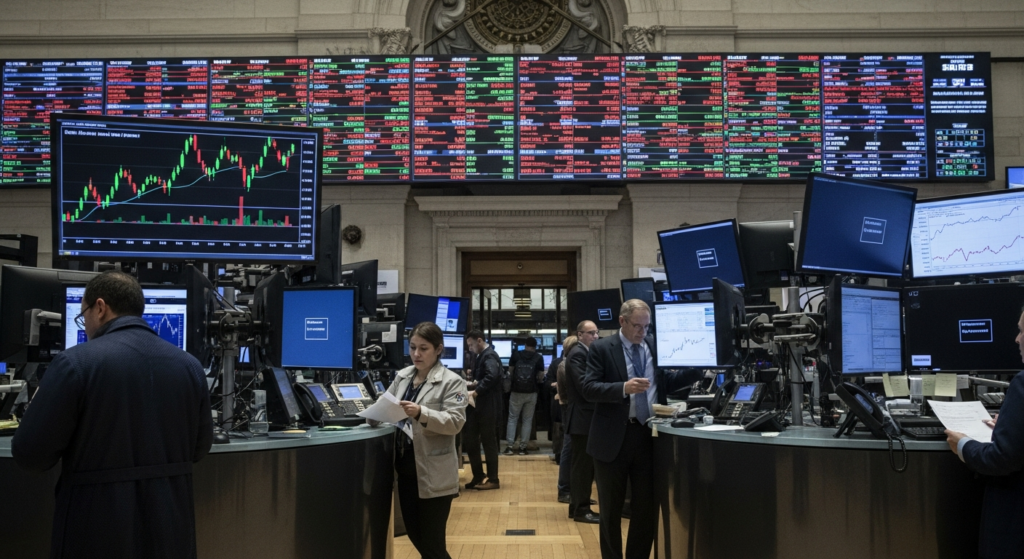
National markets opened the second half of the year with a flat performance, as a global stock gauge registered a slight decline. Traders and investors are closely analyzing recent commentary from the Federal Reserve, alongside a significant decrease in crude oil prices, as they position themselves for the remainder of 2026.
Investor focus remains sharply tuned to signals from the Federal Reserve. Market participants are scrutinizing any indications regarding the central bank’s future monetary policy, particularly its stance on interest rates and inflation. Economic data releases are also a key factor influencing sentiment, as traders seek clarity on the health and trajectory of the broader economy. This ongoing assessment of the Fed’s direction and incoming economic reports is shaping expectations for corporate earnings and overall market stability in the coming months.
Adding to the market’s cautious start was a pronounced drop in oil prices. Both U.S. crude and Brent crude benchmarks saw declines, reflecting shifts in global supply and demand dynamics. Lower oil prices can have a dual impact on the economy: while they can reduce costs for consumers and businesses through cheaper fuel, they can also signal concerns about global economic growth if the price drop is driven by weakening demand. The interplay of these factors is contributing to the current market environment as the financial community adjusts its outlook.
For investors, the start of the second half often involves re-evaluating portfolios and adjusting strategies based on anticipated economic conditions. The current environment, characterized by Federal Reserve uncertainty and fluctuating commodity prices, underscores a period of careful consideration for those with investments. The broader economic data being digested by national markets provides a backdrop against which local economic activity in places like Clemson is also influenced, albeit indirectly.
### Why it matters in Clemson
The national market trends, particularly Federal Reserve policy and oil price movements, carry tangible implications for the Clemson area. As a community anchored by Clemson University, a major employer and economic driver, the broader economic climate can affect everything from endowment performance to consumer spending by faculty, staff, and students. Lower fuel prices, stemming from the drop in crude oil, could offer some relief to households and businesses in Clemson by reducing transportation and operational costs. Conversely, sustained market volatility could impact local retail trade in areas like Patrick Square Town Center and along College Avenue, as consumer confidence often correlates with economic stability. The financial health of the nation ultimately ripples down to local economies, influencing employment, investment, and daily living costs for residents.