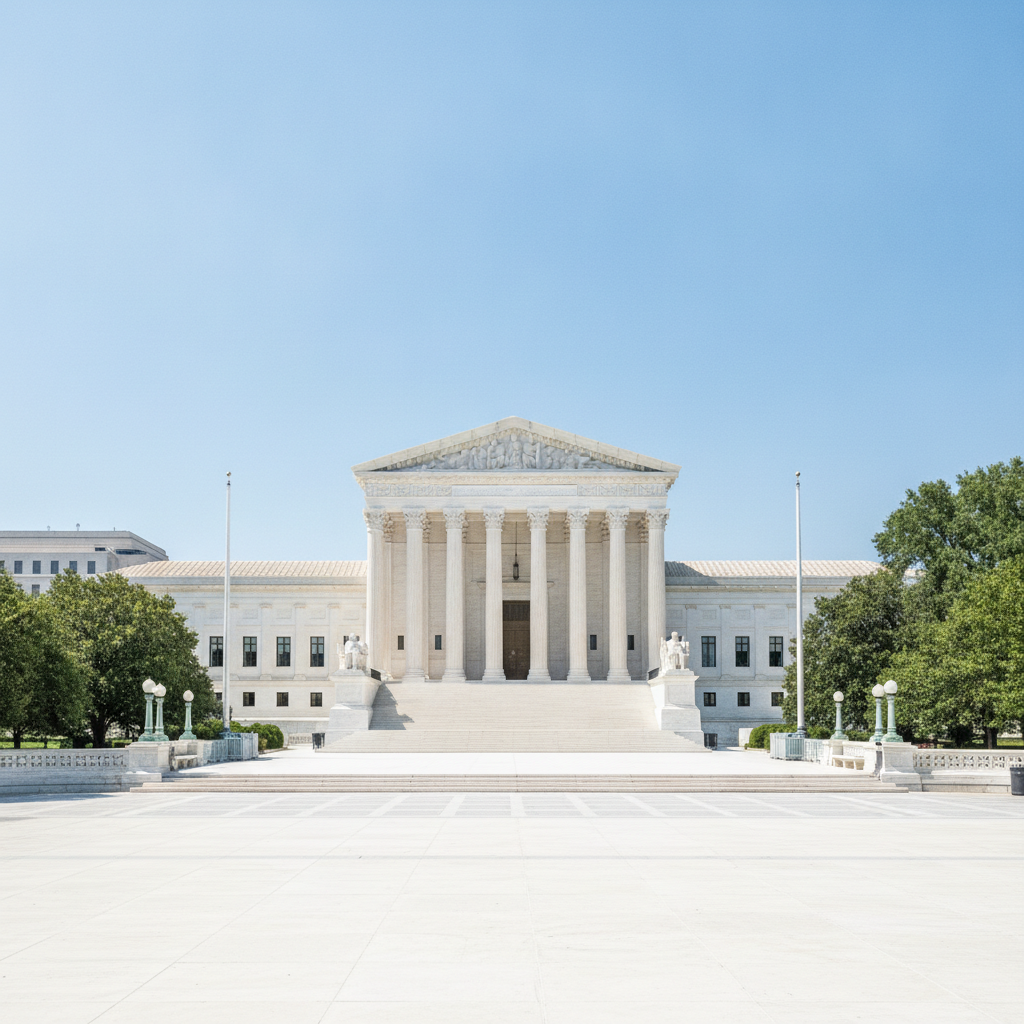
The Supreme Court on Monday afternoon, August 24, cleared the way for the Trump administration to begin implementing an executive order that imposes restrictions on mail-in voting. The court paused an injunction issued by a federal judge in Boston, which had previously prevented the federal government from applying provisions of the executive order in the November elections to 23 states and the District of Columbia.
A separate ruling from the same judge, stemming from a different set of plaintiffs, temporarily prohibits the U.S. Postal Service from implementing one specific provision of the executive order across the United States. This particular ruling remains in effect for now.
In its 10-page, unsigned opinion, the majority stated that it was premature for courts to consider the states’ challenge because the order had not yet been carried out. This means the states had not yet experienced the kind of injury necessary for their lawsuit to proceed. The court’s three Democratic appointees dissented. Justice Ketanji Brown Jackson, in a 23-page opinion, accused the majority of missing the government’s actual objective to foment chaos ahead of the November elections.
President Donald Trump signed the executive order in March. The case focused on three provisions: the first instructs the Department of Homeland Security to create lists of adult U.S. citizens in each state and send them to states at least 60 days before a federal election. The second commands the U.S. attorney general to prioritize the investigation and prosecution of state and local officials who issue federal ballots to ineligible voters. The third requires states to provide the U.S. Postal Service with lists of voters to whom they intend to send mail ballots, prohibiting the USPS from mailing ballots to voters not on the USPS-created lists of enrolled voters.
A coalition of 23 states, led by California, and the District of Columbia challenged the order in a federal court in Massachusetts. They argued the executive order conflicts with constitutional provisions granting states the power to determine voter eligibility and set the times, places, and manner of congressional elections.
U.S. District Judge Indira Talwani ruled that claims regarding federal elections after November 3, 2026, were not yet ripe for review. However, she found that claims related to the upcoming midterm elections were ripe, as the order created a direct and immediate dilemma for the challengers. She prohibited the federal government from implementing the challenged restrictions on or before November 3, 2026, in the District of Columbia and the 23 states.
The U.S. Court of Appeals for the 1st Circuit declined to pause Talwani’s order, noting that neither the federal government nor 12 states supporting the Trump administration had argued the executive order was legal. The appeals court also rejected arguments that the challengers lacked standing or that the case was not ripe, stating the executive order’s consequences gave states no practical choice but to respond immediately.
The Trump administration sought relief from the Supreme Court on July 27. U.S. Solicitor General D. John Sauer renewed arguments that the claims were not ripe because agencies had not yet decided how to implement the order. He also contended that pausing Talwani’s order would prevent the government from finalizing and implementing policies to promote election integrity for the November federal elections, causing irreparable harm as mail-in voting in some states was just one month away.
Alabama and the 11 other states supporting the Trump administration cited two recent rulings by the U.S. Court of Appeals for the District of Columbia Circuit involving the same executive order, one of which held it was too early to challenge the order, and the other allowing its reinstatement on the same basis.
The challengers countered on August 3 that putting Talwani’s injunction on hold would allow the federal government to rush out an unprecedented, legally indefensible voter-verification and ballot-interception program, granting the U.S. Postal Service far-reaching new powers. They emphasized that the 1st Circuit agreed that the executive order’s timelines and impending deadlines created a concrete injury allowing them to sue.
Three weeks later, the Trump administration again urged the justices to intervene, citing the imminent publication of a new U.S. Postal Service rule. Sauer stated this rule imposes modest requirements for federal ballot mail preparation and envelope design, such as requiring official Election Mail logos, automation compatibility, and unique barcodes. He argued that without pausing Talwani’s order, the Postal Service could not implement this rule for the upcoming November elections.
The Supreme Court majority found that the first provision, instructing the DHS secretary to create state citizenship lists, is an internal directive that does not injure states, thus precluding a challenge. The second provision, directing the Attorney General to prioritize investigating and prosecuting those who violate existing federal laws by issuing ballots to ineligible voters, falls within presidential powers and does not harm states. The third provision, ordering the Postal Service to initiate a rule-making process, was not a proposed or final rule when the lawsuit was filed, and any potential harm was based on an attenuated chain of inferences. The majority concluded that if a final Postal Service rule harms states, they may challenge that rule at that time.
The majority also determined that the government would suffer irreparable harm if Talwani’s order was not paused, as a reversal would come too late for the 2026 midterms. Conversely, the states would not be harmed by pausing the order because the executive order does not require them to take any action.
Justice Sonia Sotomayor, joined by Justice Elena Kagan, wrote that she would have kept Talwani’s order in place. She stressed that the majority’s ruling does not address the lawfulness of the President’s attempts to interfere with states’ administration of the November 2026 elections, nor does it suggest executive branch authority to implement the directives. Instead, she concluded, the decision merely postpones adjudication of those challenges. Sotomayor suggested the government was trying to have it both ways, arguing it was speculative there would be a final rule while also insisting on immediate implementation for irreparable harm.
Justice Jackson acknowledged that the majority had not foreclosed states from challenging the order but characterized the ruling as another chapter in a Kafkaesque nightmare for plaintiffs bringing election-related challenges. She argued that while the court has for two decades made clear that valid election claims can come too late, the majority now indicates such claims can also come too early, which is problematic when the government controls the timing of proposed and final rules.