New hunters preparing for the upcoming seasons are encouraged to complete a state-approved hunter education course, secure the necessary licenses and species tags, and ensure legal access to hunting grounds. These foundational steps are outlined in a comprehensive guide designed to equip beginners with the knowledge required for safe and ethical participation in the sport.
Hunter education courses serve as the cornerstone of responsible hunting, imparting crucial lessons on firearm safety, wildlife conservation, ethics, and regulatory compliance. These programs are typically offered in several formats to accommodate diverse schedules and learning preferences. Traditional classroom instruction often includes a mandatory field day, providing hands-on experience with equipment and practical scenarios. Online courses, increasingly popular for their flexibility, also frequently require a separate field day to ensure practical skill development. For adult learners in some states, fully online coursework may be an option, though the emphasis on practical application remains paramount. The guide stresses that completing such a course is often a prerequisite for obtaining a hunting license, making it the first critical step for any aspiring hunter in South Carolina.
Beyond education, obtaining the correct hunting license and species-specific tags is a non-negotiable requirement. These documents are essential for legal participation and contribute directly to wildlife management and conservation efforts. Hunters must also diligently secure legal access to hunting land before venturing out. This can involve navigating public land regulations, which vary significantly by state and specific game units, or obtaining explicit permission from private landowners. Understanding the boundaries and permissible activities on any given parcel of land is vital to avoid trespassing and ensure a lawful hunting experience. For those in the Clemson area, understanding the regulations governing hunting on state-managed lands or private properties in Pickens County and surrounding areas is particularly important.
The regulatory landscape for hunting is complex and highly localized. The guide highlights that season dates, permissible weapons, minimum calibers or draw weights for firearms, bag limits, and specific tagging or reporting requirements are not uniform. These rules can vary significantly by state, by specific game management unit within a state, by the type of weapon used (e.g., rifle, shotgun, bow), and even by the sex or age of the animal being hunted. New hunters are advised to consult South Carolina’s Department of Natural Resources publications well in advance of any planned outing to ensure full compliance with all applicable laws. This meticulous attention to detail prevents inadvertent violations and promotes sustainable wildlife populations.
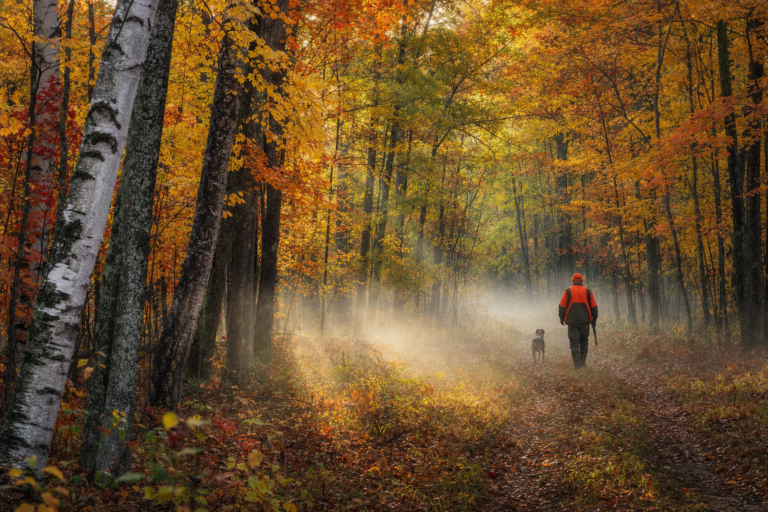
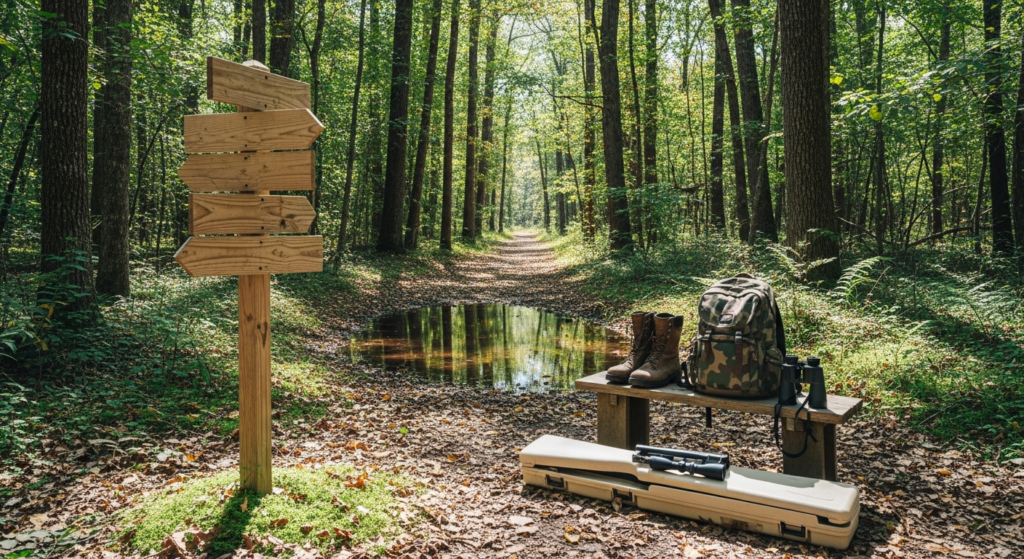
Equipping oneself properly is another vital component of a successful and safe hunting experience. The guide recommends a core set of equipment that addresses both legal requirements and practical needs in the field. This includes a legal weapon, whether a rifle, shotgun, or compound bow, along with sufficient practice ammunition or arrows to ensure proficiency. Licenses and tags must be carried at all times. Hunter orange, where mandated by state law, is crucial for visibility and safety, particularly in areas with multiple hunters. Broken-in boots are essential for comfort and support over varied terrain, while layered clothing allows for adaptation to changing weather conditions typical of the Upstate region. Binoculars aid in spotting game and assessing surroundings from a distance. A day pack should contain water, high-calorie snacks, a headlamp with extra batteries for low-light conditions, a sharp knife for field dressing, and a comprehensive first-aid kit for emergencies.
The initial investment in hunting gear can be substantial, but the guide provides approximate cost ranges for entry-level equipment. An entry-level rifle with a basic scope might cost between $450 and $800. A shotgun suitable for deer or small game typically ranges from $350 to $700. For archery enthusiasts, a compound bow package can be acquired for $400 to $900. Essential apparel, including quality boots and basic clothing layers, is estimated at $200 to $400. Entry-level binoculars, a valuable tool for scouting, generally fall within the $100 to $250 range. These figures provide a realistic expectation for new hunters budgeting for their initial foray into the sport.
Safety protocols are paramount in hunting, particularly concerning firearms. The guide emphasizes four fundamental rules: always treat every firearm as if it were loaded, always keep the muzzle pointed in a safe direction, keep your finger off the trigger until your sights are on the target and you are ready to shoot, and always be sure of your target, what is in front of it, and what is beyond it. These principles are designed to prevent accidental discharges and ensure responsible handling. For hunters utilizing elevated stands, an additional layer of safety is critical. The guide strongly advises the use of a full-body harness, a lineman’s belt for secure attachment during ascent and descent, and a lifeline to maintain continuous connection to the stand. These measures significantly reduce the risk of falls, which are a leading cause of serious hunting-related injuries.
Once an animal is recovered, proper handling is essential for both legal compliance and meat quality. The guide recommends immediately tagging the animal as required by state law, which typically involves attaching a specific tag to the carcass. Rapid cooling of the meat is crucial to prevent spoilage, especially during the warmer months of early seasons. Keeping the meat clean during field dressing and transport is equally important to maintain its quality and edibility. Hunters must also adhere to species- and state-specific rules for field dressing and transporting the animal from the field. For those who prefer professional assistance, processing services are widely available, with estimated costs ranging from around $80 to $200 or more per animal, depending on the species and the specific cuts requested.
Why it matters in Clemson
For residents of Clemson and the surrounding Upstate region, understanding responsible hunting practices is integral to the broader culture of outdoor recreation and natural resource stewardship. With proximity to significant natural areas like Lake Hartwell, Lake Keowee, and various state parks such as Keowee-Toxaway State Park and Oconee State Park, the region offers extensive opportunities for outdoor activities, including hunting in designated areas. The principles of safety, ethical conduct, and conservation outlined in this guide are not only vital for hunters but also contribute to the overall safety and enjoyment of these shared natural spaces by all users. Moreover, the economic impact of hunting, from gear purchases at local retailers to professional meat processing services, supports businesses within Pickens County and the wider Clemson community, reinforcing the importance of informed and responsible participation in this long-standing tradition.