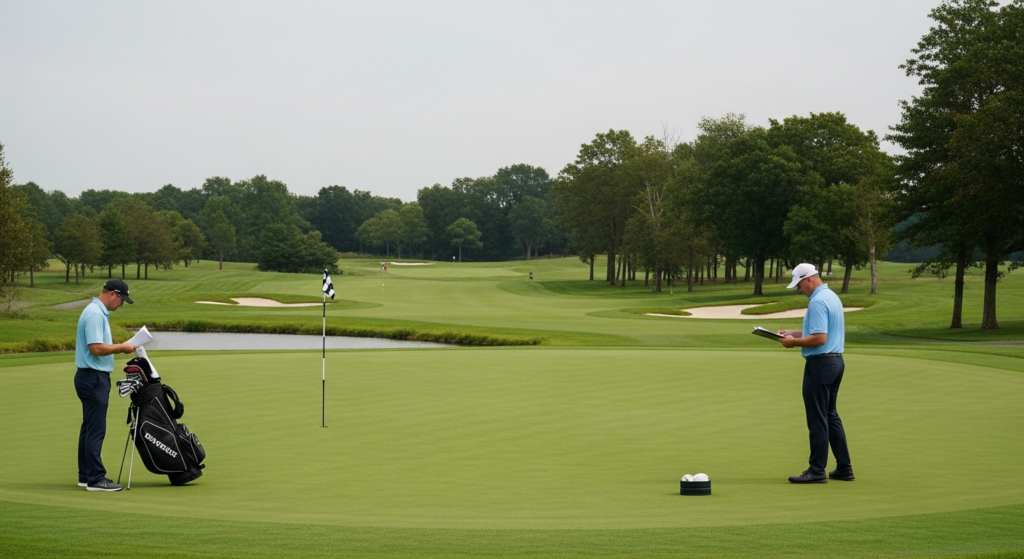
Golf, a sport revered for its blend of skill, strategy, and tradition, relies heavily on a shared understanding of etiquette and course management. For those playing in and around Clemson, adhering to these principles ensures not only a more enjoyable experience for all participants but also helps preserve the integrity of the playing grounds.
Understanding the fundamental rules of golf extends beyond the official rulebook; it encompasses a code of conduct designed to foster respect among players and for the course itself. This guidance covers everything from maintaining an appropriate pace of play to protecting the greens and ensuring safety on the links.
Basic Course Etiquette
Proper etiquette begins even before a shot is taken. When a fellow player is preparing to swing, it is crucial to remain still and silent, avoiding any movement, talking, or other distractions. Players should never walk in front of someone who is about to play, nor should they stand in a player’s line of sight. On the putting green, particular care must be taken to avoid stepping on another player’s putting line or casting a shadow across it. After a round or match concludes, a customary handshake with opponents and playing partners, often accompanied by removing one’s cap, signifies good sportsmanship. Accepting corrections or advice from more experienced players is also part of the learning and respectful environment of the game.
Maintaining Pace of Play
Slow play is a common frustration in golf, and players are encouraged to take proactive steps to maintain a good pace. Keeping up with the group ahead is paramount. This involves planning the next shot while walking to the ball and being ready to play when it’s one’s turn. “Ready golf,” where players hit when safe and ready, rather than strictly adhering to farthest-from-the-hole, can significantly speed up play, though this approach is typically modified in match play. Once a hole is completed, players should clear the green promptly, moving their bags or trolleys to the next tee area. When searching for lost balls, if multiple players are looking, it is efficient to split up. If a group is consistently falling behind and a faster group is waiting, allowing them to play through is a courtesy that benefits everyone. Some courses also implement specific procedures for certain holes, such as a designated “call-up hole” (e.g., the 8th hole in some guidance), where a group on the green, not yet putting, should wave the following group through if they are waiting on the tee. The first group then putts out after the following group has teed off.
Protecting the Course
Preserving the condition of the golf course is a shared responsibility. Every player should make an effort to repair pitch marks on the greens, which are indentations left by a ball’s impact. Similarly, divots taken from the fairway should be replaced. On tee boxes, divots are typically repaired using grass seed rather than being replaced. Golf bags and trolleys should be kept off tee boxes and greens to prevent damage. During specific seasons, such as winter, courses may implement white lines and arrows to guide players, and these directives, along with requests for winter wheels on trolleys, should be followed. When retrieving a ball from the hole, players should lift it by hand rather than scooping it out with a putter, which can damage the hole’s edge. Using designated steps or paths instead of walking on banks helps prevent erosion. If a ball lands in an area marked as ground under repair or on the wrong green, players should take a free drop as specified by the rules. Adhering to signage regarding buggy and trolley use is also essential for course maintenance.
Ball Identification and Play
Playing the correct ball is fundamental to the game. Golfers should mark their ball with a distinctive pattern or initials before teeing off to avoid confusion. It is also good practice to declare the ball being played to one’s playing partners. If a provisional ball is played, it must be distinguishable from the original ball, and its provisional status should be declared. Before striking any ball, players should always confirm it is their own. Playing the wrong ball incurs a penalty, typically two strokes in stroke play or loss of hole in match play, and the player must then replace their original ball at its correct position. Unless a ball is certainly lost, spare balls should generally not be left on the course.
Safety on the Course
Safety is paramount on any golf course. Before taking a practice swing, players must always check that no one is standing behind them. Shots should only be taken when golfers, walkers, and spectators are well out of range and safe from potential impact. When observing another player, stand at least two club lengths away. On cross-over holes, where fairways or paths intersect, players must be especially vigilant. Before teeing off on holes like the 5th, ensure the group ahead is completely clear and out of range. If a ball is struck and appears to be heading towards someone, or if it disappears from view in a populated area, the player must immediately and loudly shout “Fore!” Conversely, upon hearing “Fore!,” players should duck and cover their heads for protection.
Common Rules Issues and Dress Code
Beyond etiquette, understanding common rules issues can prevent penalties. If a ball is lost or out of bounds and no provisional ball was played, the player must replay from the previous position, incurring a one-penalty stroke. Generally, a ball should not be lifted or cleaned unless specific winter rules are in effect on the fairway or when the ball is on the green. In bunkers, players must not touch the sand before taking a shot. For an unplayable ball, a player can take a drop within two club lengths, no nearer the hole, for a one-penalty stroke. Improving a lie or swing by treading down live vegetation or moving branches is prohibited. Regarding dress, many golf clubs maintain specific codes. While tailored shorts and some golf-designer shirts are often permitted, items like jeans, sports shorts, rugby or football tops, sponsor tops, and generally sleeveless or collarless tops are typically prohibited. Golf shoes are often restricted to specific areas, such as a clubhouse bar or patio, and caps or hats may be prohibited inside the clubhouse except for special events. Mobile phones should be kept silent or switched off to avoid disturbing play.
Ultimately, the guidance emphasizes that when in doubt, players should ask their playing partners or the clubhouse staff for clarification. The most important rule, above all, is to enjoy the game responsibly and respectfully.
Why it matters in Clemson
For the Clemson community, including students, faculty, and residents, understanding and practicing proper golf etiquette and course management is crucial for fostering a positive recreational environment. With Clemson University at its heart and numerous opportunities for golf in the surrounding Upstate region, these guidelines ensure that local courses remain enjoyable and well-maintained for everyone. Adherence to these principles reflects well on the community and contributes to the welcoming atmosphere that defines recreational activities in Clemson. Whether playing at a public course or a private club, these practices help preserve the game’s traditions and ensure that golf remains a cherished pastime for all who participate in Clemson and its neighboring areas.