As the demand for artificial intelligence capabilities continues to surge, a distinct set of infrastructure bottlenecks has emerged across the technology landscape. These constraints, spanning power generation, memory, advanced chip packaging, connectivity, and cooling systems, are creating significant opportunities for a select group of companies. A recent market analysis for July 2026 highlighted nine exchange-traded firms positioned to benefit from these critical choke points.
The investment thesis underpinning these selections centers on the foundational requirements for AI development and deployment. AI data centers, which are the backbone of this technological revolution, demand immense and consistent power. Natural gas currently stands as the most popular power source for these facilities, while nuclear power is increasingly viewed as a long-term solution due to its consistent, high-output generation, offering a potential advantage over intermittent renewable sources like solar and wind.
Leading the charge in the semiconductor sector is Taiwan Semiconductor (TSM), recognized as the world’s largest chip foundry. The company reported $120.34 billion in revenue and an adjusted earnings per share (EPS) of $10.39, with a price-to-earnings (P/E) ratio of 32.64. Analysts project an impressive 48.0% EPS growth for the firm. Taiwan Semiconductor’s advanced-packaging capacity, particularly its CoWoS technology, is largely allocated to Nvidia, a key player in AI chip design, underscoring its critical role in the AI supply chain.
Micron Technology (MU), a significant player in memory solutions, has seen its stock price reach $1,060.45. The company posted $37.40 billion in revenue and an adjusted EPS of $8.29, with a P/E ratio of 46.18. Its expected EPS growth is a staggering 621.6%. Micron, alongside competitors SK Hynix and Samsung, has committed its High Bandwidth Memory (HBM) capacity through 2026, indicating robust demand. Micron’s share price has surged more than 746% over the preceding 12 months, reflecting intense market interest in its memory products essential for AI workloads.
Intel (INTC), a long-standing semiconductor giant, is also positioning itself in the AI infrastructure space. The company reported $52.90 billion in revenue and an adjusted EPS of $0.42. Intel did not have an applicable P/E ratio due to a GAAP loss per share in fiscal 2025 but anticipates 160.0% EPS growth. Its EMIB and Foveros packaging platforms are presented as alternatives to CoWoS, offering diverse solutions for advanced chip integration. Intel reportedly secured a substantial order from Google for 3 million tensor processing units by 2028, and both SK Hynix and Nvidia have been testing Intel technologies, signaling its potential resurgence in the AI hardware market.
The energy sector’s role in powering AI data centers is undeniable, with NextEra Energy (NEE) emerging as a key beneficiary. Operating the largest electric utility in the United States, NextEra Energy recorded $27.40 billion in revenue and an adjusted EPS of $3.71, with a P/E ratio of 21.84. The company expects 8.4% EPS growth. NextEra Energy is actively investing in nuclear power, aligning with the long-term energy needs of AI, and has clean-energy agreements with tech giants Google and Meta. The company also announced an intended acquisition of Dominion Energy, which remains subject to regulatory approval, further solidifying its market position.
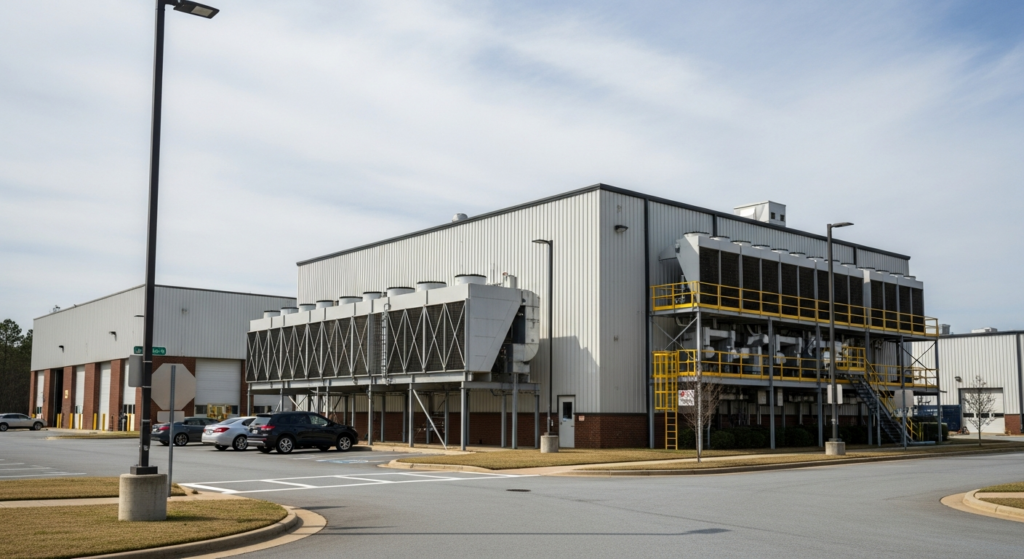
Addressing the critical need for cooling and power infrastructure in data centers is Vertiv Holdings (VRT). The company reported $10.23 billion in revenue and an adjusted EPS of $4.20, with a P/E ratio of 79.85. Vertiv anticipates 54.5% EPS growth. In February, the company reported a substantial $15 billion backlog, reflecting high demand for its products. Vertiv also announced a new digital-twin capability for its SmartRun product in June, enhancing its offerings for efficient data center management.
Williams Companies (WMB) plays a vital role in the natural gas supply chain, processing and transporting approximately 30% of U.S. natural gas usage. The company posted $11.95 billion in revenue and an adjusted EPS of $2.10, with a P/E ratio of 31.61. Its expected EPS growth is 13.4%. Williams Companies has secured long-term data-center-related contracts, including one with Meta and a 10-year agreement with an undisclosed investment-grade company, highlighting its direct involvement in fueling the AI boom.
In the realm of connectivity and data transfer, Astera Labs (ALAB) is making significant strides. The company reported $852.53 million in revenue and an adjusted EPS of $1.84, with a P/E ratio of 251.79. Astera Labs expects 63.2% EPS growth. Its first-quarter 2026 revenue surged 93% year over year to $308.4 million. While one customer, presumed to be Amazon, accounted for 70% of its 2025 revenue, its rapid growth underscores the demand for its specialized connectivity solutions.
Another key player in high-speed connectivity is Credo Technology (CRDO). The company recorded $1.34 billion in revenue and an adjusted EPS of $3.46, with a P/E ratio of 98.67. Credo Technology projects 75.4% EPS growth. Its latest-quarter revenue climbed 157% year over year to $437 million, with four customers representing 87% of its revenue, indicating strong demand for its advanced connectivity products essential for AI data flows.
Finally, Cameco Corporation (CCJ) stands out in the nuclear energy sector, offering a long-term solution for the immense power needs of AI. The company reported $3.48 billion in revenue and an adjusted EPS of $1.44, with a P/E ratio of 99.85. Cameco expects 9.9% EPS growth. Its partnership with Brookfield Asset Management and the U.S. government to deploy Westinghouse reactors has a stated value of at least $80 billion, positioning it as a significant contributor to the future energy landscape for AI.
These companies represent diverse facets of the infrastructure required to sustain the rapid expansion of artificial intelligence. Their performance and strategic initiatives offer a window into the evolving demands and investment opportunities within this transformative technological shift.
Why it matters in Clemson
The national trends in AI infrastructure and the associated demand for power and advanced technology have tangible implications for Clemson and the surrounding Upstate region. Clemson University, a leading public research institution, plays a crucial role in developing the talent and conducting the research that underpins technological advancements. As companies like NextEra Energy and Williams Companies invest heavily in energy infrastructure to support AI data centers, the broader energy landscape in South Carolina could see shifts in supply, demand, and pricing, potentially impacting major local employers such as BASF Corporation in Pickens County, which relies on stable energy for its manufacturing operations. Furthermore, the university’s engineering and computer science programs are directly relevant to the skills needed to build, maintain, and innovate within the AI ecosystem, ensuring that Clemson remains a vital contributor to the national technological workforce.