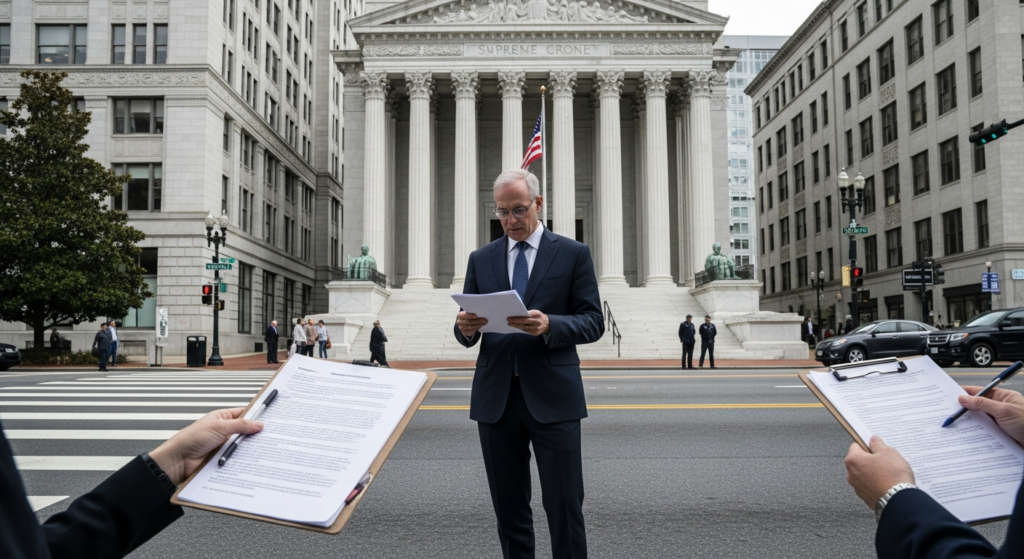
The Supreme Court’s next term is set to tackle a series of contentious legal disputes, with decisions expected to reverberate through state and local jurisdictions, including here in Clemson and across South Carolina. The docket includes significant cases concerning assault-style rifle restrictions, voter-registration rules, LGBT-related religious-rights questions, and immigration detention procedures.
These cases, routed through political and courts review due to their implications for election rules, constitutional claims, and federal-government litigation, underscore the far-reaching influence of the nation’s highest court on daily life.
One of the most closely watched areas involves challenges to assault-style rifle restrictions. The Supreme Court has increasingly shaped the interpretation of the Second Amendment, and its upcoming rulings could clarify the extent to which states and localities can regulate certain types of firearms. For South Carolina, a state with a strong tradition of gun ownership, any decision could either affirm existing state laws or necessitate new legislative considerations. Discussions around public safety and individual rights are ongoing in communities like Clemson, and a federal ruling could significantly alter the landscape of these debates.
Another critical area on the docket concerns voter-registration rules. These cases could impact how elections are administered nationwide, potentially affecting voter access and the integrity of the electoral process. In South Carolina, where election procedures are managed at the state and county levels, a Supreme Court decision could influence practices in Pickens County and beyond. For institutions like Clemson University and Tri-County Technical College, which serve large student populations, changes to voter registration could have direct implications for how students participate in elections. The ability to register and cast ballots is a fundamental aspect of civic life, and any adjustments to these rules would be closely observed by local officials and advocacy groups.
LGBT-related religious-rights questions also feature prominently in the upcoming term. These cases often involve a delicate balance between religious freedom protections and anti-discrimination laws. The outcomes could define the scope of religious exemptions in various contexts, from public accommodations to employment. South Carolina has its own legal and social framework regarding LGBT rights, and federal rulings could either reinforce or challenge existing norms and protections within the state. Businesses, educational institutions, and individuals in Clemson could find themselves navigating new legal precedents depending on the Court’s decisions.
Finally, the Court will also hear cases related to immigration detention procedures. While perhaps less directly visible in the immediate Clemson area, federal immigration policy and its enforcement mechanisms have broad impacts across the country, affecting communities and economies in various ways. Decisions in this realm could influence federal agencies’ operations and the rights of individuals held in detention, with potential downstream effects on state resources and legal aid services.
As the Supreme Court prepares for its next term, the implications of these cases extend far beyond Washington, D.C., touching upon fundamental rights and governmental powers that shape the lives of residents in South Carolina and its communities.
### Why it matters in Clemson
The Supreme Court’s upcoming docket holds significant weight for Clemson residents and institutions. Decisions on gun policy could influence local public safety discussions and the enforcement of state laws, affecting how the City of Clemson and Pickens County Sheriff Thomas Blankenship approach firearm regulations. Rulings on voter registration could directly impact the thousands of students at Clemson University and Tri-County Technical College, potentially altering their ability to participate in elections and shaping the demographics of local voter turnout. Furthermore, cases involving LGBT-related religious rights could influence local businesses, schools, and public services, requiring adjustments to policies and practices to align with federal mandates. These national legal battles underscore the interconnectedness of federal jurisprudence with the daily lives and governance of communities like Clemson.