Public safety officials nationwide issued warnings regarding fireworks use over the recent Fourth of July weekend, emphasizing the risks of burn injuries, compromised air quality, and potential wildfires. These advisories, circulated across various national platforms, serve as a pertinent reminder for communities like Clemson to remain vigilant about consumer fireworks safety.
National reports highlighted the significant potential for severe burn injuries associated with consumer fireworks. These devices, while popular for celebrations, carry inherent dangers that frequently lead to emergency room visits. Common injuries include thermal burns to hands, fingers, and arms, often resulting from improper handling, device malfunction, or delayed ignition. Eye injuries, ranging from corneal abrasions to permanent vision loss, are also a serious concern, as are facial and ear injuries from close-range explosions. Even seemingly innocuous items like sparklers, often given to children, can reach temperatures exceeding 1,000 degrees Fahrenheit, hot enough to cause third-degree burns.
Beyond immediate physical trauma, the widespread use of fireworks contributes to a temporary but significant decline in air quality. The combustion of pyrotechnic materials releases fine particulate matter (PM2.5) into the atmosphere, along with various gases and metallic compounds. This particulate matter can penetrate deep into the lungs, exacerbating respiratory conditions for individuals with asthma, chronic obstructive pulmonary disease, or other sensitivities. The impact on air quality is particularly pronounced in areas with concentrated displays, potentially affecting residents across Clemson and the broader Upstate region.
A critical component of the national safety warnings addressed the heightened risk of wildfires, especially in dry conditions. The Upstate region, including areas surrounding Clemson, features significant natural landscapes that are vulnerable to fire. Parks such as Keowee-Toxaway State Park, Table Rock State Park, Oconee State Park, and the South Carolina Botanical Garden, along with extensive forested areas near Lake Hartwell, Lake Keowee, and Lake Jocassee, present environments where embers from fireworks can travel considerable distances. These embers pose a substantial threat to dry vegetation and structures, particularly during the summer months when foliage can be parched. While specific local fire restrictions were not detailed in the national advisories, the general principle of extreme caution applies to any area with combustible natural elements, including the watersheds of the Seneca River, Keowee River, and Twelve Mile River.
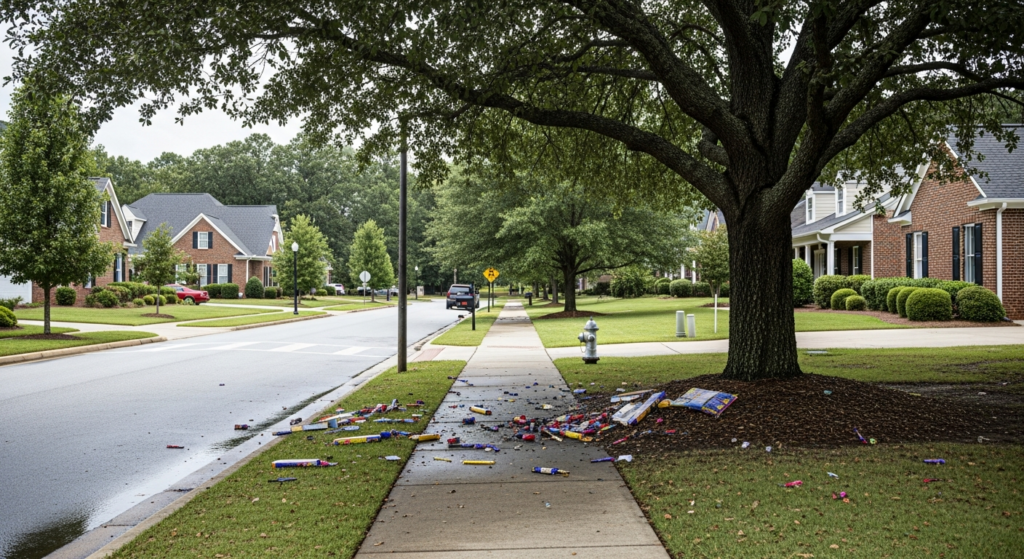
Safety experts consistently advise against allowing children to handle fireworks, including sparklers, due to the high temperatures they can reach. Other recommendations for safe handling include maintaining a safe distance from ignition points, ensuring a water source (such as a garden hose or bucket of water) is readily available, and never attempting to re-light malfunctioning fireworks. It is also crucial to avoid pointing fireworks at people, animals, or structures. The safe disposal of spent fireworks is another key precaution; they should be thoroughly doused with water before being placed in a trash receptacle to prevent delayed ignitions or smoldering. These practices are vital for protecting both individuals and the surrounding environment in Clemson.
### Why it matters in Clemson
The national focus on fireworks safety, air quality, and wildfire prevention holds particular relevance for Clemson, a community nestled amidst significant natural beauty and home to Clemson University. The proximity of residential areas, including neighborhoods like Patrick Square and Calhoun Forest, to extensive green spaces and waterfront properties along Lake Hartwell and Lake Keowee, means that even isolated incidents of improper fireworks use can have far-reaching environmental and public safety consequences. Local emergency services, including the City of Clemson’s fire department, are continually prepared to respond to such events, underscoring the collective responsibility of residents to adhere to safety guidelines and protect both property and the region’s natural resources. The health of the community, from those with respiratory sensitivities to the preservation of natural habitats, is directly impacted by adherence to these safety principles.